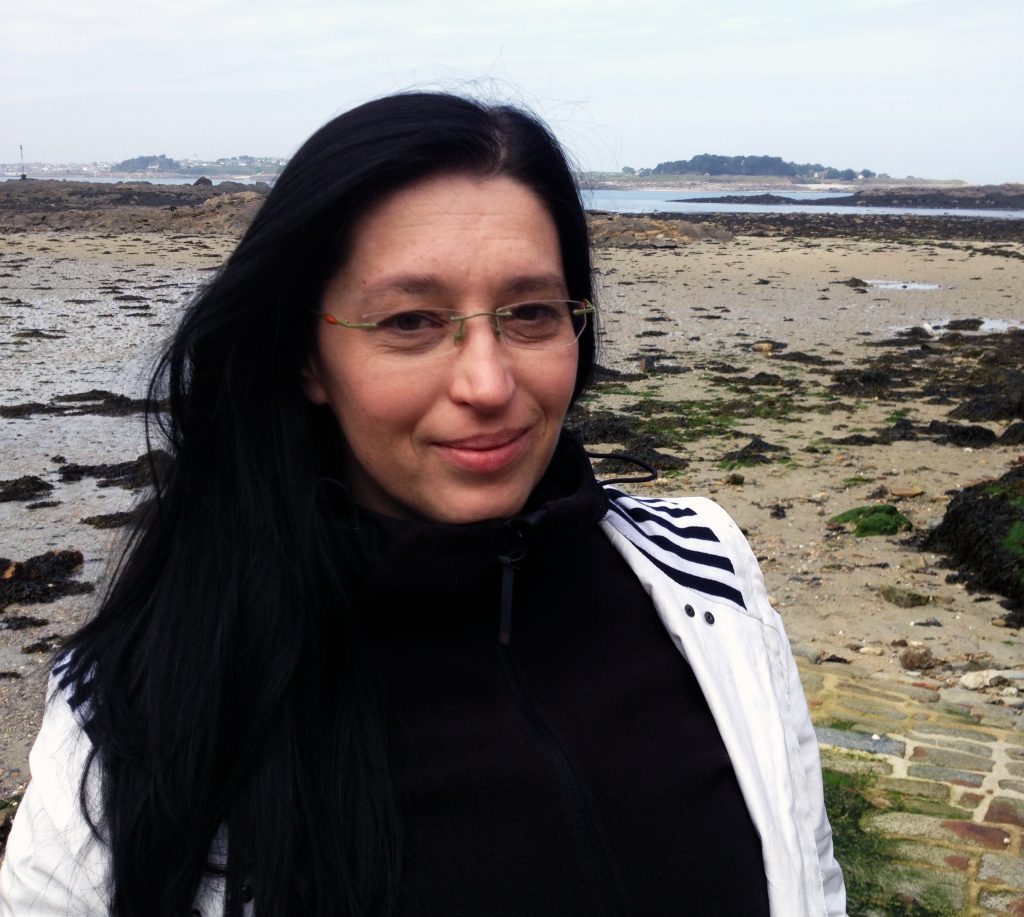
Robertina Šebjanič
BIO
Robertina Šebjanič is an artist/researcher whose work explores the biological, (geo)political, and cultural realities of aquatic environments and the impact of humanity on other organisms. Her work is interdisciplinary, poetic, and strongly connected to science and other fields of social action. In her analysis of the Anthropocene and its theoretical framework, she uses the terms “aquatocene” and “aquaforming” to refer to the human impact on aquatic environments.
Her works have received awards and nominations at Prix Ars Electronica, Starts Prize, Falling Walls, and Re:Humanism. Šebjanič has presented her work at ZKM (Karlsruhe), CCCB (Barcelona), Cukrarna (Ljubljana), Matadero (Madrid), WRO Biennale (Wroclaw), Ars Electronica (Linz), Art Laboratory (Berlin), Eastern Bloc (Montreal), Laboratorio Arte Alameda (Ciudad de Mexico), MSU – Museum of Contemporary Art (Zagreb), MSUB – The Museum of Contemporary Art (Belgrade), La Gaîté Lyrique (Paris), Le Cube (Paris), +MSUM Museum of Contemporary Art Metelkova (Ljubljana), and CCD (Ciudad de Mexico).
WORK AT THE EXHIBITION
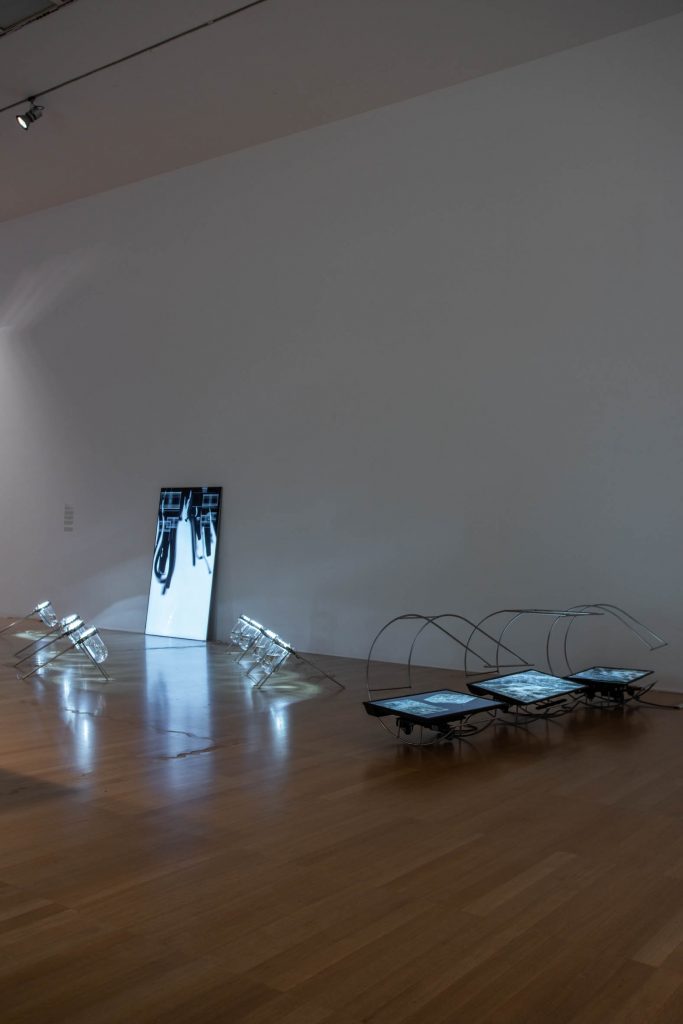
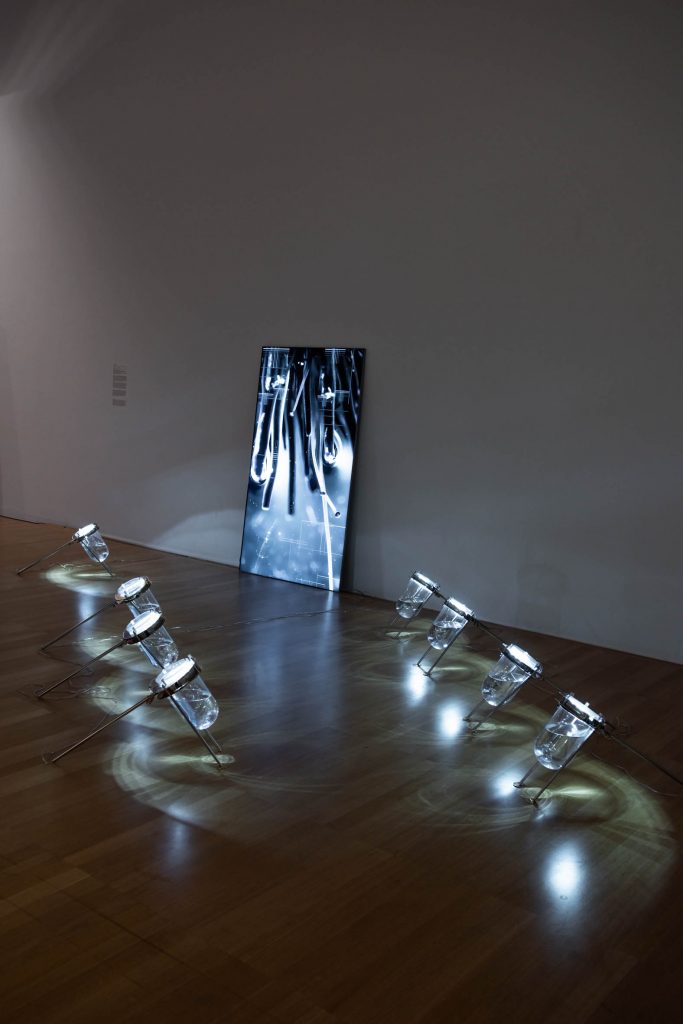
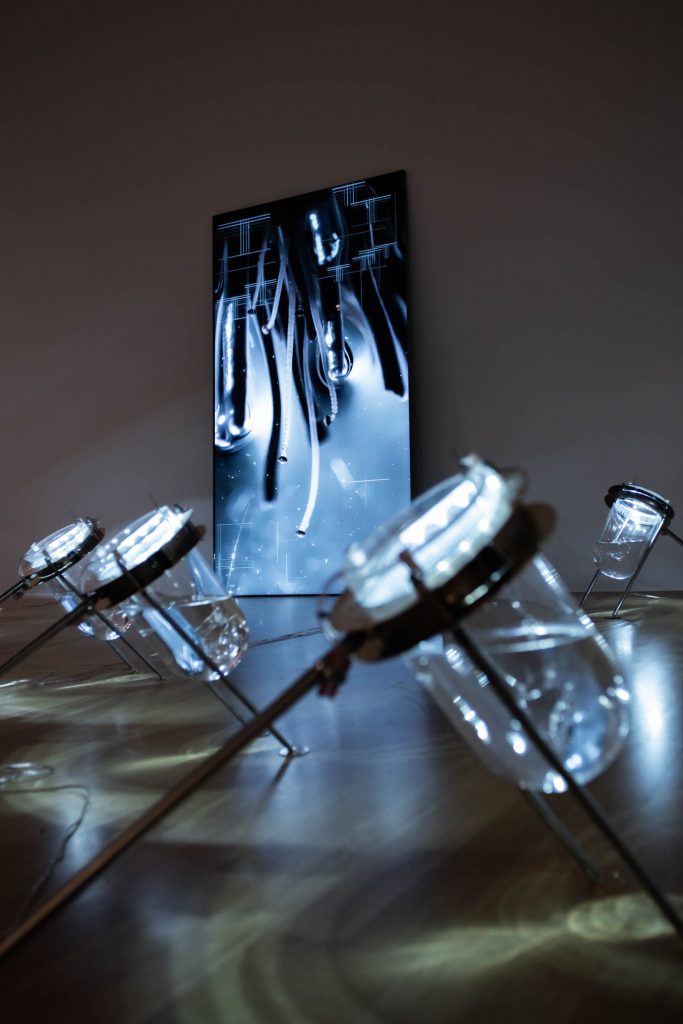
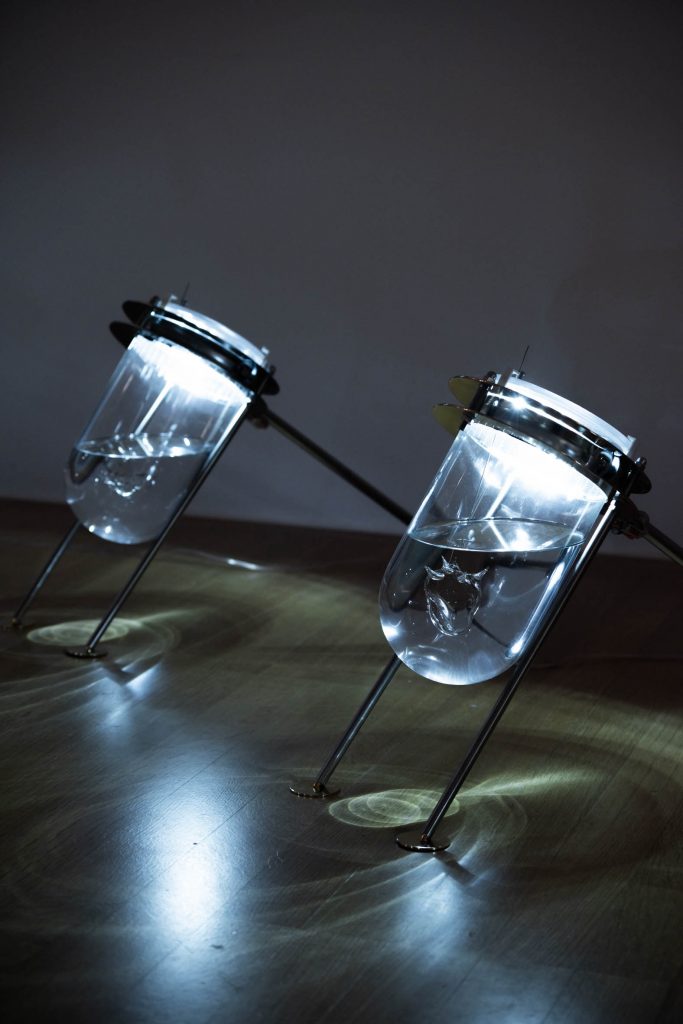
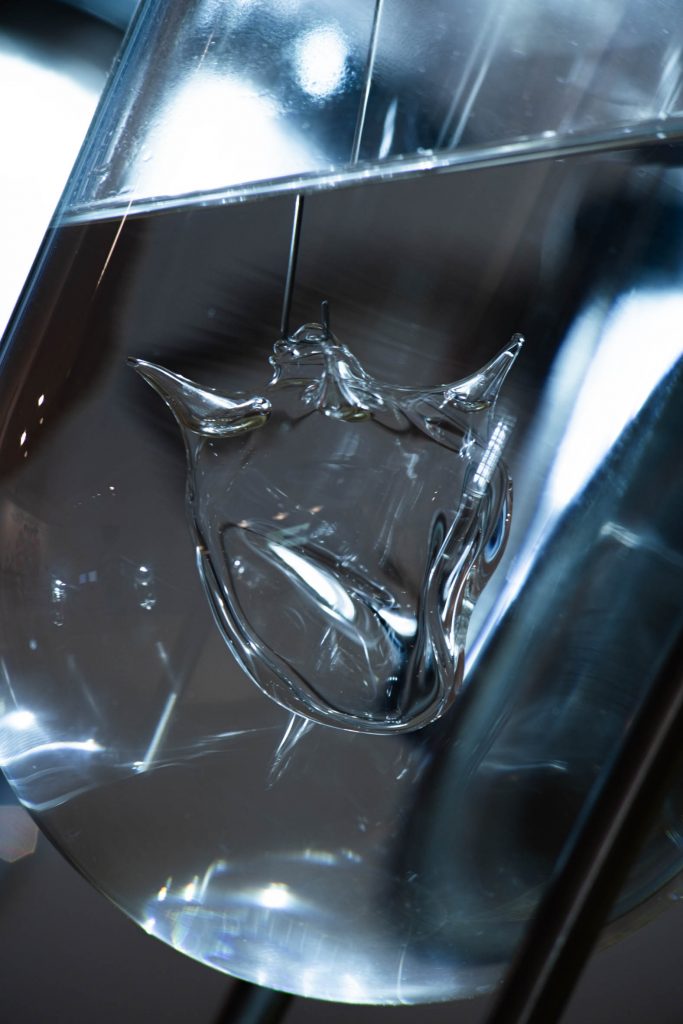
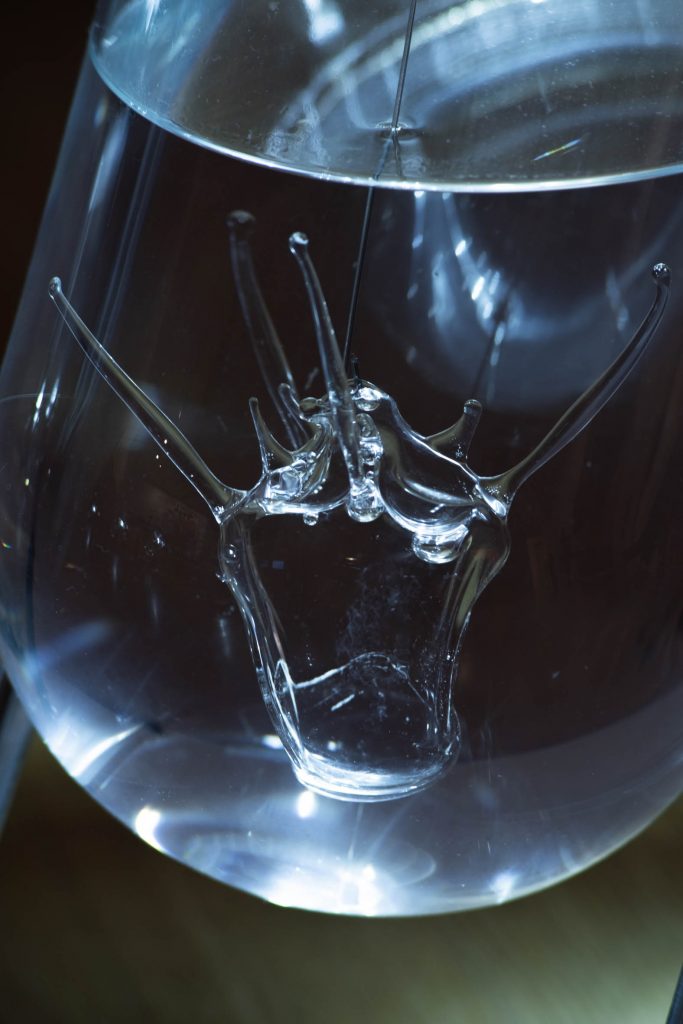
Echinoidea Future – Adriatic Sensing, 2021/2022
multimedia installation
Artist (concept, sound & video editing, execution): Robertina Šebjanič
Production: UR Institute 2021/2022
Co-production: Zavod Sektor, Zavod Studio Aquatocene, PiNA
Production team: Ivanka Pašalić (glassblowing), David Drolc (metal construction), Tanja Minarik (AI video support), Miha Godec & Jakob Grčman (technical support)
Scientific advisors: dr. Alenka Malej, dr. Matjaž Ličer, Gjino Šutić & Filip Grgurević (UR Institute); dr. Marijana Hure & dr. Valter Kozul (Institute for Marine and Coastal Research, University of Dubrovnik)
Special thanks to: Martina Gluhan, Marjan Žitnik
*The Zero Pollution Adriatic was commissioned by UR Institute within the framework of STARTS4Water, funded by S+T+ARTS, an initiative of the European Commission, launched under the Horizon 2020 research and innovation program.
The project Echinoidea Future – Adriatic Sensing addresses the current biogeological and morphological conditions impacting the sea urchin habitat in the coastal region of South Adriatic Sea, which is aqua-formed by anthropogenic liquid waste that leads to low oxygen levels in seawater. Sea urchins, as pollution indicators, are vital herbivorous grazers influencing benthic communities. The art installation juxtaposes experimental setups with synchronized screens displaying three decades of environmental big data from the EU Copernicus platform. This data, transformed by artificial intelligence, represents the fluctuations in South Adriatic Sea’s ecological parameters (temperature, pH, oxygen, salinity). The glass blown sculptures and the artistic representation of microscopic research align with the cultural heritage in arts and craftsmanship. Exploring the stressors of the local/global human footprint, the project demonstrates the resilience of the aquatic species, Echinoidea Future – Adriatic Sensing acts as an activation of (sy)(e)mpathia (sympathy and empathy).